Välkommen till ISYs interna webbsidor
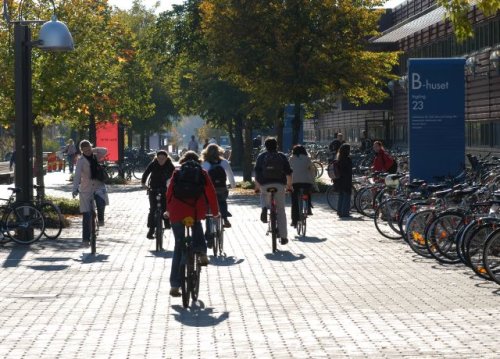
B-huset

Institutionen för systemteknik (ISY) är central inom olika ingenjörsutbildningar både vad gäller baskunskaper och tillämpade kurser. Forskningen baseras främst på industriella behov och spänner från helt grundläggande frågor till mera applikationsnära frågor.

Grundutbildning

Institutionen erbjuder cirka 100 olika kurser inom fyra grundutbildningsområden: Bild, Elektronik, Reglersystem och Telekommunikation. Inom universitetets program finns ett antal inriktningar som vi koordinerar.

Forskning

Forskning och forskarutbildning bedrivs inom ämnesområdena: Datorseende, Elektronik och datorteknik, Fordonssystem, Informationskodning, Kommunikationssystem och Reglerteknik.

Examensarbete

Här finns också information om hur man hittar och gör examensarbete hos oss.

Framläggningar

  • 2026-03-26 kl 10:00 i Hammingrummet

    User Activity Classification in LTE Networks Using Convolutional Neural Networks

    Författare: Hannes Olin
    Handledare: Ahmet Kaplan
    Examinator: Danyo Danev
    Nivå: Avancerad (30hp)

  • 2026-03-27 kl 13:15 i Systemet

    TDOF-based Localization of a Radio Receiver Using Stimulated Unintentional Emission

    Författare: Carl Mattsson
    Opponent: Hannes Olin
    Handledare: Gustav Zetterqvist
    Examinator: Fredrik Gustafsson
    Nivå: Avancerad (30hp)

    Countermeasures are required to address the constantly evolving technology of electronic warfare, such as Radio Controlled Improvised Explosive Devices (RCIEDs) which are a constant threat to the lives of military personnel as well as civilians. Due to poor construction in some radio controllers used to trigger the Improvised Explosive Device (IED), the phenomenon of Stimulated Unintentional Emission (SUE) can be used as a method for detecting and locating such devices.

    In this master’s thesis, a Time-Difference-of-Flight (TDOF)-based localization approach that utilizes range estimates to the RCIED receiver is developed. The range estimates depend on the transmitted and received stimulation signals. These estimates are obtained by calculating the correlation between the signals, followed by interpolation in order to improve the time resolution of the measurement. The time differences are thereafter converted into distance estimates used in the localization process.

    The localization results of Monte Carlo simulations based on the collected range estimates indicate that SUE measurements can be used for TDOF-based localization. However, these simulations also demonstrate the importance of measurement data and how it is utilized, with regard to the number of samples per measurement position, as well as geometric placement and the number of measurement positions around the radio controller.