Welcome to the internal ISY pages
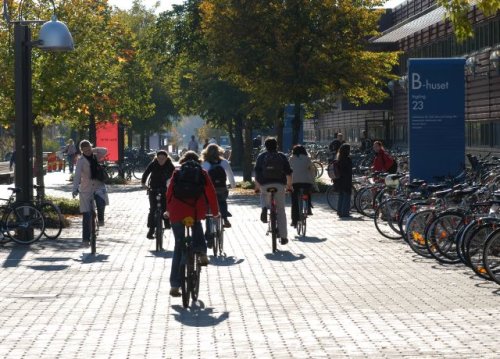
The Department of Electrical Engineering (Institutionen för systemteknik, ISY) is central in our engineering programmes both for base knowledge and applied courses. The research is primarily focused on industrial needs and reaches from foundational questions to more application-centered issues.
Undergraduate education
The department offers more than 100 different courses within four undergraduate education areas: Images, Electronics, Automatic control, and Telecommunication. Within the university’s programs there are a number of specialisations coordinated by us.
Research
Research and research education is performed within the subject areas: Computer vision and learning systems, Electronics and computer engineering, Vehicular systems, Information coding, Communication systems och Automatic control.
Master’s thesis
Here you can read about how to find and finish a Master’s thesis with us.
Thesis defenses
-
2026-09-04 kl 10:00 i Nollstället (ISY)
Design and Implementation of an FPGA-Controlled Digital Class-D Audio High-Power Amplifier using Three-Level Delta-Sigma Modulation
Författare: Elias Aguilar Olsson
Opponent: Nino Seide
Handledare: Hampus Malmberg
Examinator: Alireza Saberkari
Nivå: Avancerad (30hp)
-
2026-09-04 kl 14:00 i ISY Systemet
Evaluating Hybrid Key Exchange in TLS 1.3 with MbedTLS
Författare: Hannes Linde
Opponent: Madeleine Nilsson
Handledare: Gustaf Åhlgren
Examinator: Onur Günlü
Nivå: Avancerad (30hp)